Patient guide
Your first eye visit, made a little easier.
Cam Sur Eye Center · Updated 24 September 2026 · 5-minute read
CAM SUR EYE CENTER
Patient guide
Make your first visit feel familiar.
Before you go
A little preparation makes room for your questions.
- Confirm the branch, appointment request, and doctor’s schedule before travelling.
- Bring your glasses, medicines list, and any previous eye records.
- Ask whether dilation is likely and arrange help with the journey home if needed.
Start with the reason for your visit
You do not need to know the diagnosis before you book. A useful starting point is a short description of what changed, when it began, and which daily activity is harder.
For example: “Small print has become difficult over the past month,” or “My eyes sting toward the end of the working day.” If you are attending for a known condition, bring the last doctor’s instructions and explain what you would like clarified.
Choose your three most important questions. Writing them down helps you remember them when the visit feels busy.
Some symptoms should not wait for a routine visit
Sudden loss of vision, new flashes or a sudden increase in floaters, a dark curtain, or severe eye pain needs urgent assessment. Seek urgent eye care or go to the nearest emergency department; do not wait for an online appointment response. 2 3
Your appointment bag: a practical checklist
- The glasses you currently use, including reading and work pairs.
- Eye drops, or clear photographs of their names and instructions.
- A list of medicines, allergies, health conditions, and previous eye operations.
- Old prescriptions, referral letters, scans, or visual field results, if available.
- Your short symptom timeline and three main questions.
- Sunglasses and the details of your planned ride home if dilation is expected.
Confirm the practical details
Ask which branch you should attend: Nabua or Naga City. Confirm the address and schedule, especially if you are travelling from another town or bringing a family member. An online request still needs confirmation from the clinic.
If you have been referred for a particular test, tell the team when arranging the visit. Ask whether the consultation and test can happen together, how much time to allow, and whether there are preparation instructions.
Ask about the consultation fee and possible additional charges. If you plan to use any benefit or insurance arrangement, confirm eligibility and documents with the clinic before relying on it.
What may happen during the examination
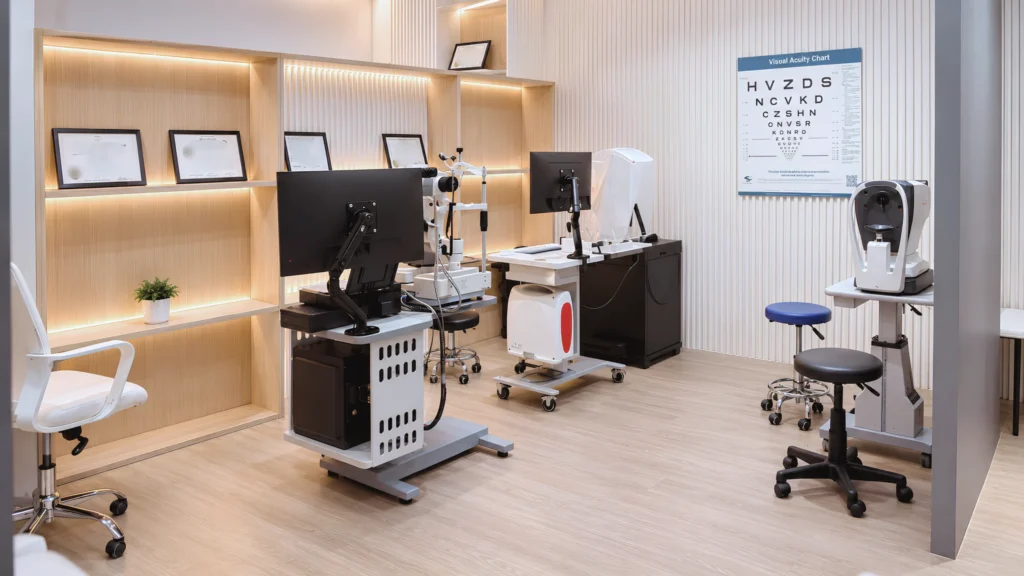
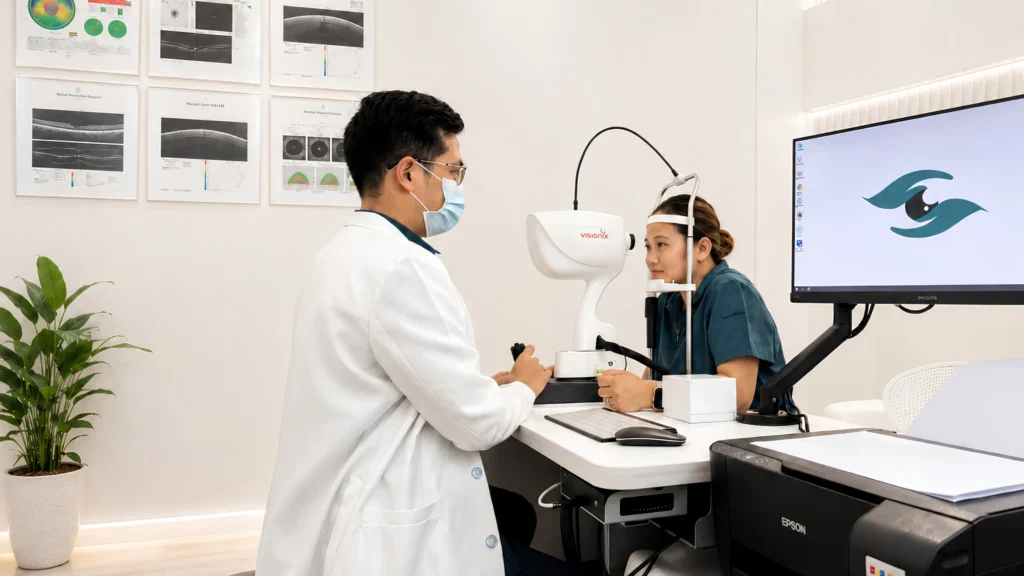
The visit begins with your concerns and health history. Depending on your needs, the clinician may assess how clearly you see, check pressure, examine the eyes, or recommend other tests. Not every appointment includes every test. 1
If a test is recommended, ask what question it will help answer. Tell the examiner if you cannot see the target, are uncomfortable, or do not understand an instruction. It is better to ask than to guess.
You can ask: “Could you explain that in everyday words?” If having a companion take notes would help, discuss that with the team.
Dilation and getting home
Dilating drops widen the pupil so the doctor can look inside the eye. For a few hours afterward, vision may be blurred and bright light uncomfortable. Bring sunglasses and arrange someone to drive or accompany you home. 1
Do not plan to drive while your vision is affected. Ask the team what to expect for your visit, particularly if you will need to read small labels, return to detailed work, or travel a long way.
Before you leave, check these five things
- What was found, or what still needs to be investigated?
- What should I do next, and are the instructions written down?
- If treatment was prescribed, do I understand how to use it?
- When should I return, and which tests or records will I need?
- What warning signs mean I should seek care sooner?
Make the follow-up easier
Keep the visit summary, prescriptions, and test reports together. Add the next appointment to your calendar and keep the clinic’s contact details accessible. If a family member helps with medicines or transport, share the agreed plan with them.
If you cannot follow an instruction because of cost, schedule, or difficulty using a product, contact the team to discuss it. Do not silently change a prescribed plan. A useful follow-up conversation includes what you actually managed to do and any problems you noticed.
Common questions before a first visit
Should I stop my medicines before the appointment?
Follow the instructions from your treating clinician. Do not stop or change prescribed medicines on your own. Ask the clinic if you are unsure about preparation for a specific test.
Can I attend without old records?
Yes. Bring what you have and tell the doctor where earlier care was provided. Ask which missing records would help with the next step.
Can someone come with me?
A companion can help with notes and travel. Check with the branch about the arrangements, especially if you need mobility or communication support.
Does a booking request mean my appointment is confirmed?
No. The team will contact you to confirm the schedule. Check that you have received confirmation before making travel plans.
Your feedback matters
Is this article helpful?
Your answer helps us understand what readers find useful.
Keep reading