Glaucoma
Glaucoma can be quiet. Early care matters.
You may not notice changes at first. A comprehensive eye examination helps assess the optic nerve and identify the need for further tests.
Nabua & Naga City
Personal, doctor-led care
CAM SUR EYE CENTER

Care & ongoing support
A conversation with your ophthalmologist.
The essentials
Start with these key points
- Glaucoma can damage the optic nerve before you notice changes in vision.
- Pressure is one part of the assessment; it is not the whole diagnosis.
- Treatment and regular follow-up aim to protect the vision that remains.
When to seek urgent care
Sudden severe eye pain, a red eye, blurred vision or halos, especially with headache, nausea, or vomiting, can signal an acute glaucoma attack. Seek urgent eye care immediately or go to the nearest emergency department. Do not wait for an online reply. 2
What is glaucoma?
Glaucoma is a group of conditions that damage the optic nerve, which carries visual information to the brain. Existing loss is permanent, so care focuses on limiting further damage. Some people develop glaucoma even without unusually high eye pressure. 1
Why feeling fine does not rule it out
The common, slowly developing forms may cause no obvious early symptoms. Side vision can be affected as disease progresses. A different, acute form can cause a sudden painful attack. 2
If you have a diagnosis or a family history, bring that information even if reading and distance vision still seem clear. Tell your doctor about missed follow-up visits so the next steps can be planned from your current situation.
Risk and the reason for screening
Age and family history can increase risk. Your doctor considers these alongside your eye findings and medical history. 1
Ask when your next examination should be and what would make the interval change. A relative’s experience can be useful context, but it does not predict your own diagnosis, treatment, or outcome.
The tests work together
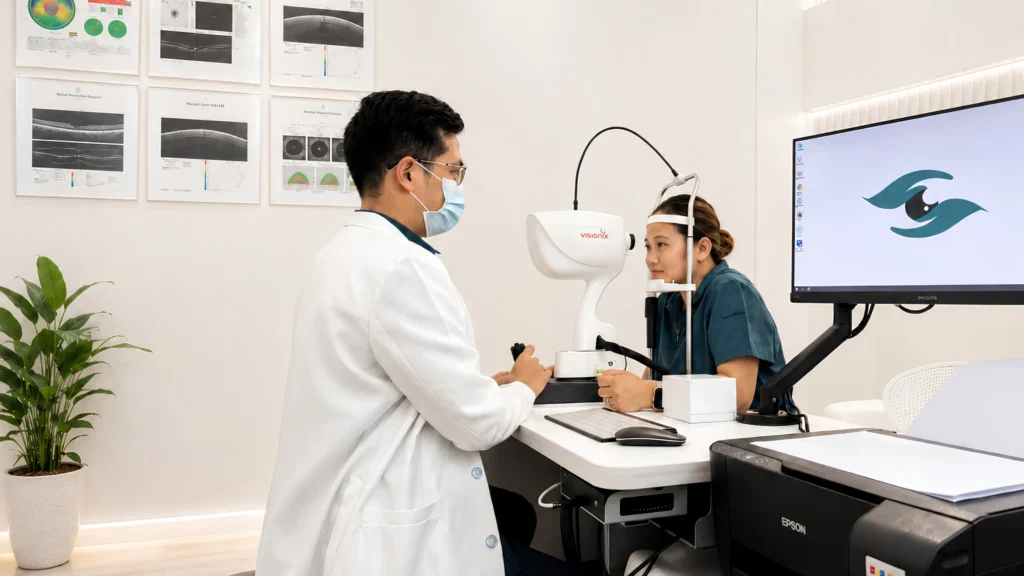
A glaucoma assessment may include pressure measurements, an optic nerve examination, visual field testing, imaging, and checks of the drainage angle or corneal thickness. The combination helps the doctor interpret the findings. 3
Ask which result is a starting measurement and which is being compared with an earlier visit. Bring previous field tests and scans if you are transferring care; a verbal summary alone may not show how things have changed.
Understanding the treatment plan
Medicines, laser, or surgery
Treatment may involve prescribed drops, laser treatment, or surgery. The recommendation depends on the type of glaucoma and how well the eye is responding. 2
Making treatment workable
Ask the doctor to show you how to use prescribed drops. If cost, side effects, hand coordination, or remembering doses is difficult, say so. Do not change treatment on your own. Bring every bottle to the review so the instructions can be checked.
Keeping follow-up useful
Before leaving, write down your next visit, which tests are planned, and what the doctor wants to monitor. Ask how you should arrange care if you will be travelling or cannot attend the proposed date.
Glaucoma and Philippine eye health
Glaucoma was among the causes of visual impairment reported in the 2018 Philippine Eye Disease Study. The survey is historical national evidence, not a measure of an individual’s risk. 4
For ongoing care in Camarines Sur, discuss travel and prescription access early. Ask whether the next visit needs a specific test appointment and what records to bring.
Questions to take to your appointment
- What type of glaucoma or glaucoma risk do I have?
- Which findings are we monitoring over time?
- Can you check my drop technique and written schedule?
- What is the next step if the current treatment is not enough?
Frequently asked questions
Does one high pressure reading prove I have glaucoma?
No. Pressure is interpreted with the optic nerve, visual field, and other findings. Ask what your full assessment shows. 3
Can I stop drops when my eyes feel normal?
Do not change prescribed treatment without your treating doctor’s advice. Feeling comfortable is not a substitute for reviewing the measurements.
Will every person need surgery?
No. Ask why a particular option is recommended for your eyes and what the alternatives involve.
Should I bring old scans even if they were done elsewhere?
Yes. Bring copies with their dates and any previous treatment instructions. Tell the team if you need help identifying which records are relevant.
Your feedback matters
Is this article helpful?
Your answer helps us understand what readers find useful.
Keep reading