Pterygium
A growth on your eye? Get clear answers.
A visible growth or repeated irritation can be worrying. An eye assessment can help identify the cause and the most suitable next step.
Nabua & Naga City
Personal, doctor-led care
CAM SUR EYE CENTER

Clear advice, close to home
An assessment is the first step.
The essentials
Start with these key points
- A pterygium is a tissue growth that can extend onto the clear front surface of the eye.
- The examination looks at irritation, growth, and any effect on vision.
- Monitoring, comfort measures, or surgery may be discussed; removal is not automatic.
What is a pterygium?
A pterygium is a usually wedge-shaped growth from the conjunctiva onto the cornea. It often appears on the side nearest the nose. It is generally benign, but a new growth should be examined instead of identified from a photograph alone. 1
What you may notice
The growth may be visible without causing much discomfort. Other people notice redness, a gritty feeling, or blur if it changes the shape or clarity of the cornea. 1
Tell the doctor when you first noticed it and whether its size or appearance seems different. If you have older photographs, bring them as background information; they do not replace examining the eye.
Sun, wind, and the eye surface
Pterygium is associated with ultraviolet exposure and is more common in sunny settings. Wind and dust can also irritate the eye surface. 2
Describe your work and outdoor routine, including farming, driving, construction, or time on the water if relevant. Ask what protection is practical for those activities, such as UV-protective sunglasses and a brimmed hat. 2
How a growth is assessed
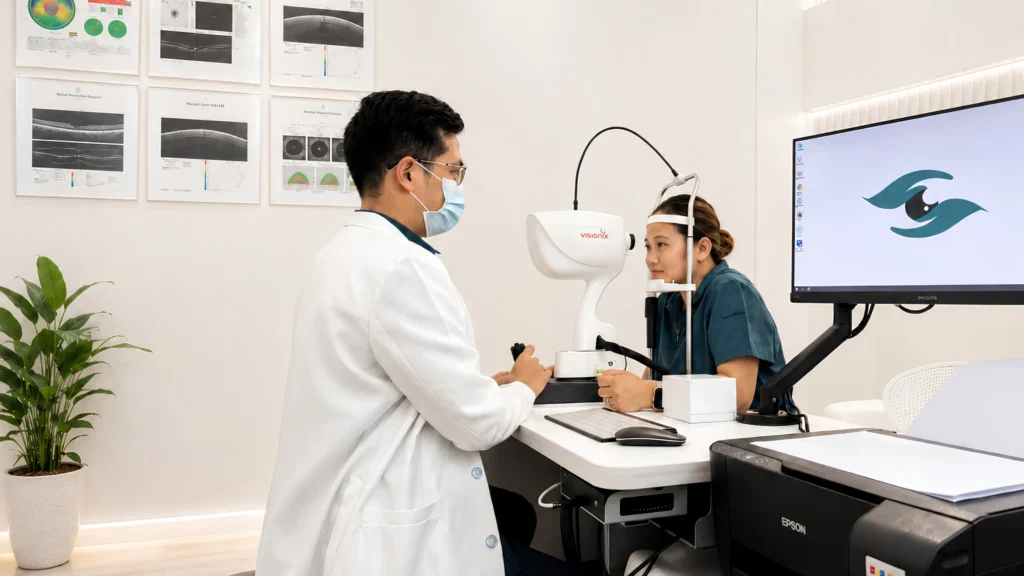
An eye examination helps confirm the type of growth and assess its effect on the cornea and vision. Your doctor may use a slit lamp for a close view. 1
Useful questions include: How far does it extend? Is it affecting focus? What change would make treatment more urgent? Ask how growth will be monitored and when you should return.
Understanding your options
Monitoring and comfort
A small growth may not require surgery. Lubricating drops can help irritation, but they do not remove the tissue. 3
Discussing surgery
Surgery may be considered if the growth affects vision, continues to grow, or causes troublesome symptoms. Ask your surgeon about the proposed approach and the benefits and risks for your eye. 1
A clear decision includes what surgery is intended to improve, what it may not change, and what recovery will involve. Request an estimate that makes the procedure, medicines, and follow-up arrangements easy to understand.
Questions about recovery and recurrence
A pterygium can recur after removal. Possible surgical complications include infection, inflammation, or scarring. Your surgeon can explain how the planned technique relates to these risks. 1
If surgery is recommended, ask for written instructions on eye drops, protection, work, travel, and follow-up. Do not borrow another patient’s recovery schedule: your doctor’s instructions should guide your return to usual activities.
Planning a visit in Camarines Sur
If you work outdoors, explain whether you can adjust your duties while receiving care. Bring your current drops and glasses, along with notes about irritation or changes in vision.
You can discuss the concern at either branch. Confirm the consultation schedule before travelling and ask whether any additional assessment needs to be arranged separately.
When to seek urgent care
A new growth deserves an examination. Seek urgent care for severe pain, sudden loss of vision, or a rapidly worsening red eye instead of assuming the growth explains every symptom.
Questions to take to your appointment
- Is this definitely a pterygium, and is it affecting my vision?
- What should we watch for if we monitor it?
- What are the expected benefits and risks of removal for my eye?
- How should I plan work, medicines, and follow-up after treatment?
Frequently asked questions
Does every pterygium need to be removed?
No. Discuss the symptoms, growth, and effect on vision before deciding. Ask why the doctor recommends monitoring or surgery in your situation.
Can drops make the growth disappear?
Lubricating drops may improve comfort but do not remove a pterygium. 3
Is a visible growth always a pterygium?
No. Similar-looking eye surface changes can have different causes. An examination is the starting point for identifying the problem.
Can it return after surgery?
Recurrence is possible. Ask your surgeon about your individual risks and follow-up plan before choosing treatment.
Your feedback matters
Is this article helpful?
Your answer helps us understand what readers find useful.
Keep reading