Diabetic retinopathy
Have diabetes? Make time for your eyes.
Retinal changes can develop before you notice symptoms. An eye assessment helps determine the care and follow-up you need.
Nabua & Naga City
Personal, doctor-led care
CAM SUR EYE CENTER

A closer look at eye health
Make eye care part of your routine.
The essentials
Start with these key points
- Diabetes can affect the retina before you notice a change in sight.
- Clear vision does not replace the eye checks recommended for you.
- Monitoring or treatment depends on the retinal findings, not symptoms alone.
What is diabetic retinopathy?
Diabetic retinopathy is damage to blood vessels in the retina, the light-sensitive tissue at the back of the eye. Vessels may leak, and more advanced disease can involve abnormal new vessels. Swelling at the macula can affect detailed central vision. 1
Symptoms and silent changes
Early changes may have no symptoms. Later, people may notice blur, floaters, or areas of missing vision. Any new change deserves attention rather than waiting for the next scheduled diabetes visit. 2
Write down when the change started and whether it affects one or both eyes. Bring previous retinal photographs, scans, or treatment records if you have them.
Who needs an eye care plan?
Both type 1 and type 2 diabetes can affect the retina. Longer duration of diabetes, higher blood glucose, blood pressure, and cholesterol can increase risk. 2
Ask your diabetes clinician and eye doctor to help coordinate follow-up. Tell them about pregnancy or plans for pregnancy, which can affect the recommended retinal monitoring. 1
An eye visit and your usual diabetes care have different roles. Bring relevant recent results and a medicines list so the conversation is connected.
What the eye assessment checks
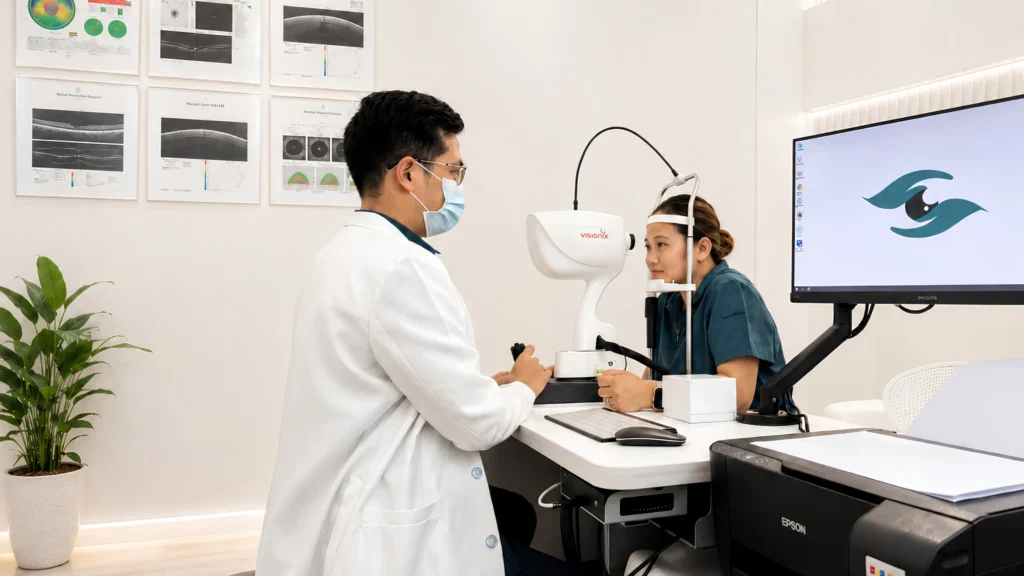
A dilated examination helps the doctor assess the retina. Retinal photographs may document findings, and OCT imaging can help assess swelling. Not everyone needs the same tests. 1
Ask whether the findings affect one or both eyes, whether the macula is involved, and what the next step is. If the explanation includes a stage or unfamiliar term, ask the doctor to write it down.
What monitoring and treatment can involve
Monitoring earlier changes
Some findings need monitoring and continued attention to diabetes and blood pressure management. The doctor sets your eye follow-up interval. 2
Treating sight-threatening changes
Depending on the problem, treatment may include injections, laser, or surgery. Your eye doctor will explain suitability and whether care with a retinal specialist is needed. 1
Ask which treatment is being considered, where it would take place, the likely visit schedule, and the costs. This guide describes possible approaches; it does not mean every procedure is offered at every branch.
Preparing for continuing care
Keep a folder with the diagnosis, eye test reports, dates of treatment, and the next review. If several clinicians are involved, ask which information should be shared with each one.
Discuss practical barriers early: transportation, time away from work, or needing someone to accompany you after dilation. If you miss an appointment, contact the team to rearrange it instead of waiting for symptoms.
A note on Philippine evidence
The 2018 Philippine Eye Disease Study recorded diabetic retinopathy among some participants without visual impairment. This historical finding supports attention to eye health even when daily vision seems unchanged. 3
Your own examination determines the plan for your eyes; a national survey cannot tell you whether you have retinal changes.
When to seek urgent care
A sudden shower of floaters, flashes, a dark curtain, or sudden loss of sight needs urgent eye assessment. Do not wait for a routine diabetes appointment or an online booking response. 1
Questions to take to your appointment
- What retinal changes, if any, were found in each eye?
- Do I need monitoring, treatment, or a specialist referral?
- When is my next eye review, and what would make it sooner?
- What information should I take back to my diabetes clinician?
Frequently asked questions
Do I need an eye check if I can see clearly?
Yes. Retinal changes can start without symptoms. Ask your doctor for the screening or follow-up interval appropriate for you. 2
Does a new glasses prescription check the retina?
A prescription check has a different purpose. Ask whether your appointment also includes the retinal assessment recommended for diabetes.
Will everyone with retinopathy need laser treatment?
No. The stage, location, and other findings guide the recommendation. Ask why monitoring or a particular treatment is suitable in your case.
What if I have no previous records?
You can still arrange an assessment. Tell the doctor what you remember about earlier care and where it was provided; ask which records would be helpful to request.
Your feedback matters
Is this article helpful?
Your answer helps us understand what readers find useful.
Keep reading