
Retinal examination
Dilated retinal examination
Give your doctor a wider view of your eye health.
Dilating drops widen your pupils so your doctor can examine the back of your eyes. The examination helps assess the retina and optic nerve.
Your branch, schedule, and preparation will be confirmed by our team.
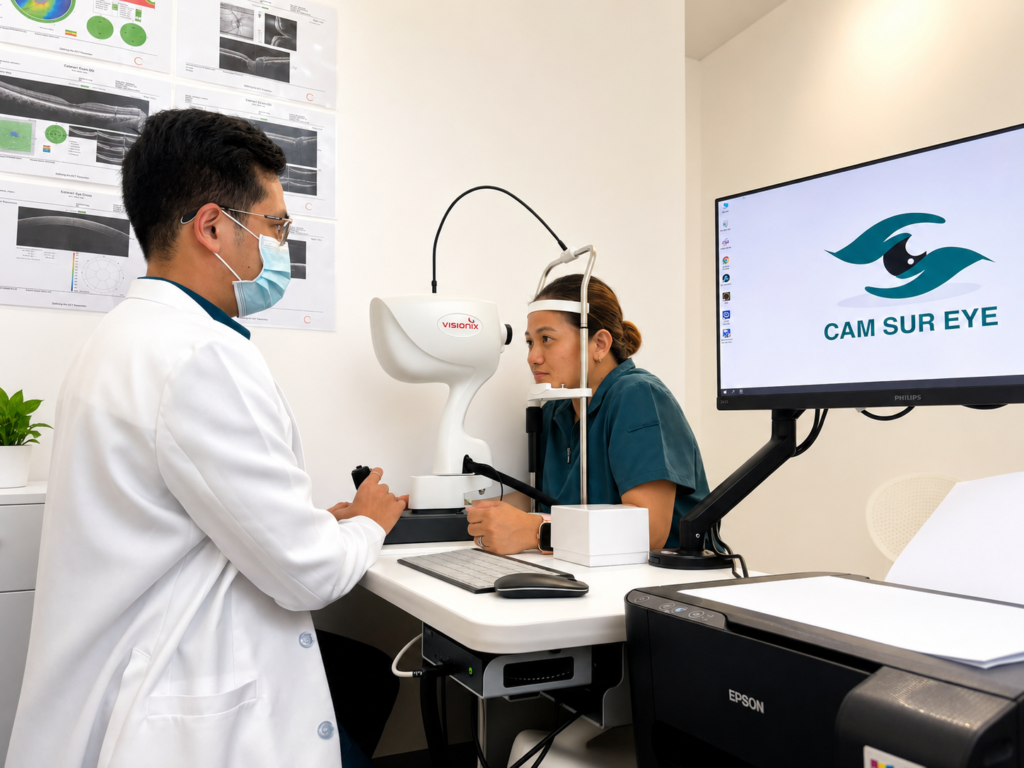
CAM SUR EYE CENTER
Care, explained one step at a time.
Retina & optic nerve review
Plan for temporary blurred vision
Before your visit
Ask about preparation and total visit time.
Practical details
Confirm branch, price, and coverage.
Is this for you?
When might your doctor recommend it?
- Your doctor needs to examine the back of your eye more closely.
- You have diabetes or another reason for retinal assessment.
- You need review of an existing retinal or optic nerve concern.
Not sure which test you need? Start with an eye consultation. A test is selected to answer a clinical question; it is not automatically needed for every patient.
What to expect
Three steps, with guidance along the way.
01
Get ready
Bring sunglasses and arrange someone to take you home. Drops can temporarily blur vision and make bright light uncomfortable.
02
Have the test
The team applies dilating drops, allows them time to work, and examines the back of your eyes using light and lenses.
03
Understand the next step
Ask when your results will be reviewed, who will explain them, and whether another appointment is needed. Bring your questions to that discussion.
The test, explained
About your test.
What it is. A dilated retinal examination lets your doctor look more closely at the retina and optic nerve at the back of your eye. Enlarging the pupils improves the view of these structures and helps your doctor assess changes that may not be apparent from symptoms or a vision chart alone.
How it works. Eye drops widen your pupils, then your doctor uses a light and examining lenses to inspect the back of your eyes. This is a direct clinical examination rather than an automated scan, although photographs or other imaging may also be recommended. The examination light can feel bright while your pupils are dilated.
How to prepare. Bring sunglasses and arrange for someone to take you home. Dilating drops can temporarily blur your vision and increase light sensitivity, so do not drive until your vision has returned to normal and the clinic says it is safe. Tell the team about previous reactions to drops and the medicines you use.
People behind your care
Support from an eye care team.

YOUR CLINICAL TEAM
Dr. Mark Linus P. Meneses
Medical Director · Ophthalmologist
Learn about the clinic’s medical team, and ask who will perform your test and review your results.
FROM OUR PATIENTS
Get a feel for the clinic.
Hear about the clinic experience directly from patients.
Your questions, answered
A little clarity before you come in.
Does this test hurt?
Drops may sting briefly and the examination light can be bright. Tell the team about discomfort and any previous reaction to drops.
How long should I allow for my appointment?
The full visit may include registration, preparation, the test, and review. Ask your branch for the expected total time and whether results will be discussed that day.
Do I need a referral?
Tell our team whether another doctor requested the test, and bring the request and previous results. If you have not been assessed, ask whether a consultation is needed before booking.
How much does it cost, and can I use insurance?
Ask for the current test price and whether consultation or other fees are separate. Give the clinic your provider and plan details so participation, authorization, and any patient share can be checked.
Can I drive afterward?
Do not drive while your vision is blurred or you are dazzled by light. Arrange transport and follow the clinic’s advice about when it is safe to drive again.
Take the next step
Let’s plan your visit.
Send a request for your Dilated retinal examination. Our team will help confirm your branch, the available schedule, and any preparation needed.
Prefer to speak with us? Call your branch.
Nabua
Naga City