
Eye pressure
Eye pressure assessment
One useful measurement in the bigger picture.
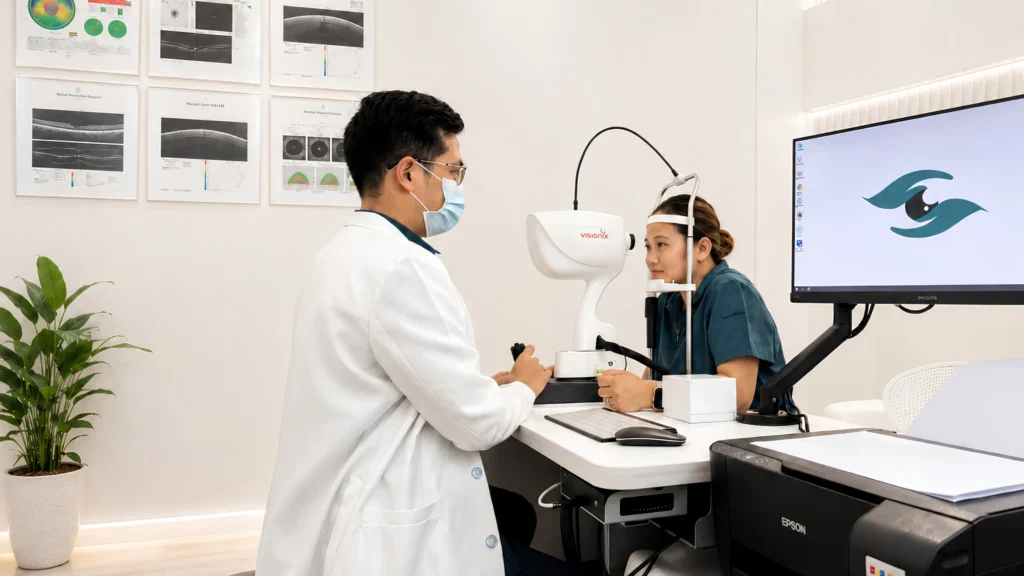
Tonometry measures pressure inside the eye. Your doctor interprets it alongside the examination and other findings when assessing glaucoma risk or monitoring care.
Your branch, schedule, and preparation will be confirmed by our team.
CAM SUR EYE CENTER
Care, explained one step at a time.
Measures eye pressure
Part of a fuller assessment
Before your visit
Ask about preparation and total visit time.
Practical details
Confirm branch, price, and coverage.
Is this for you?
When might your doctor recommend it?
- You have been told your eye pressure is raised.
- You are having glaucoma assessment or follow-up.
- Your doctor recommends a pressure check as part of your examination.
Not sure which test you need? Start with an eye consultation. A test is selected to answer a clinical question; it is not automatically needed for every patient.
What to expect
Three steps, with guidance along the way.
01
Get ready
Bring your current eye drops and tell the doctor when you last used them. Continue prescribed medicines unless your treating clinician says otherwise.
02
Have the test
The method may use a small puff of air or a device that briefly touches the eye after numbing drops.
03
Understand the next step
Ask when your results will be reviewed, who will explain them, and whether another appointment is needed. Bring your questions to that discussion.
The test, explained
About your test.
What it is. An eye pressure assessment, also called tonometry, measures the pressure inside your eye. It is one part of checking for and monitoring glaucoma. A pressure reading on its own cannot confirm or rule out glaucoma, so your doctor considers it together with the optic nerve, visual field, and other examination findings.
How it works. A tonometer estimates pressure by measuring how the cornea responds to a small force. Depending on the method, this may involve a puff of air or brief contact with a measuring device. Some contact methods use numbing drops first. The team will explain the method being used before taking the reading.
How to prepare. Bring your prescribed eye drops or a current medicine list, and tell the team when you last used them. Do not stop prescribed treatment unless your clinician asks you to. Let the examiner know if you wear contact lenses or have had a reaction to eye drops, and follow their instructions about removing your lenses.
People behind your care
Support from an eye care team.

YOUR CLINICAL TEAM
Dr. Mark Linus P. Meneses
Medical Director · Ophthalmologist
Learn about the clinic’s medical team, and ask who will perform your test and review your results.
FROM OUR PATIENTS
Get a feel for the clinic.
Hear about the clinic experience directly from patients.
Your questions, answered
A little clarity before you come in.
Does this test hurt?
You may notice the air puff. Contact methods usually use numbing drops. Let the team know about discomfort or previous reactions to eye drops.
How long should I allow for my appointment?
The full visit may include registration, preparation, the test, and review. Ask your branch for the expected total time and whether results will be discussed that day.
Do I need a referral?
Tell our team whether another doctor requested the test, and bring the request and previous results. If you have not been assessed, ask whether a consultation is needed before booking.
How much does it cost, and can I use insurance?
Ask for the current test price and whether consultation or other fees are separate. Give the clinic your provider and plan details so participation, authorization, and any patient share can be checked.
Is normal pressure enough to rule out glaucoma?
No. Glaucoma assessment also considers the optic nerve, visual field, and other findings.
Take the next step
Let’s plan your visit.
Send a request for your Eye pressure assessment. Our team will help confirm your branch, the available schedule, and any preparation needed.
Prefer to speak with us? Call your branch.
Nabua
Naga City